THREAT ASSESSMENT: The Fiscal and Social Collapse of Rural Regions Due to Spatial Demographic Divergence
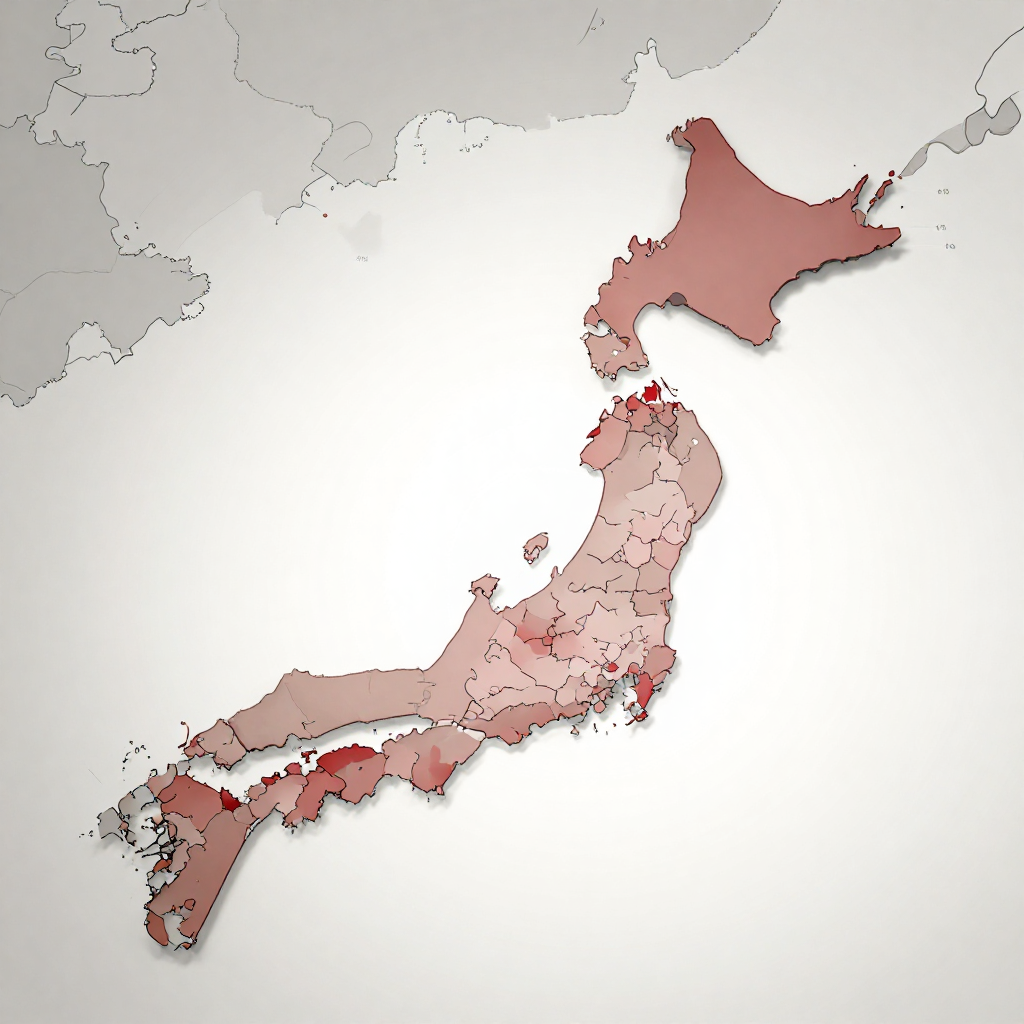
In Japan’s oldest prefectures, the share of residents over 65 is on track to exceed 60% by 2100—while Tokyo’s share triples. Similar patterns emerge in Spain’s interior and southern Italy, where shrinking tax bases and rising per-capita service costs redefine what makes a location viable for talent and investment.
Bottom Line Up Front: Without targeted, long-term policy intervention, rural and peripheral regions in aging countries face irreversible decline, marked by collapsing public services, extreme population aging, and rising per-capita fiscal costs—creating a growing equity-efficiency dilemma for national governments.
Threat Identification: The threat is the geographically uneven impact of population aging and youth outmigration, leading to the hollowing-out of rural municipalities. This is particularly acute in Japan but mirrors trends in Spain, Italy, and parts of Eastern Europe. The core mechanism is a feedback loop: outmigration of working-age adults reduces local economic scale, erodes access to services (healthcare, education, retail), increases per-person public costs, and further disincentivizes youth retention or return (Giannone et al. 2026; Heinemann et al. 2007).
Probability Assessment: High likelihood over the next 20–40 years. Japan’s five oldest prefectures (Kochi, Shimane, Tokushima, Tottori, Yamagata) are projected to see elderly shares exceed 50% by 2050 and approach 60% by 2100 under baseline conditions. Aggregate national decline began around 2010, but regional divergence started decades earlier, indicating path dependency (Giannone et al. 2026). Similar trajectories are already visible in Spain’s interior and Italy’s southern regions (Government of Spain 2021; OpenCoesione 2026).
Impact Analysis: The consequences include the functional collapse of local economies, increased interregional inequality, and higher national fiscal burdens due to inefficient service provision in low-density areas. By 2200, Tokyo’s population share could triple to 26%, while the five oldest prefectures fall below 1% combined. Even with national pensions, elderly residents remain dependent on local infrastructure now at risk (Stawasz et al. 2018). This threatens social cohesion and creates a 'fiscal arithmetic of the ghost town'—fewer taxpayers, fixed infrastructure costs, declining quality of life.
Recommended Actions: 1) Implement long-duration, place-based transfer programs (e.g., 5% income support over 100 years) to shift expectations and incentivize family formation in declining regions (Giannone et al. 2026). 2) Integrate regional demographic projections into national infrastructure planning to avoid overinvestment in unsustainable areas. 3) Pilot mixed policies combining mobility support (for youth) with targeted amenity investments (for elderly and returnees), as seen in French retiree mobility programs (Badilla-Maroto et al. 2026). 4) Strengthen intergovernmental fiscal equalization to prevent service collapse in low-revenue municipalities.
Confidence Matrix: Threat Identification – High confidence (supported by municipality-level data and migration modeling). Probability Assessment – High confidence (robust projections from calibrated dynamic model). Impact Analysis – Medium-High confidence (extrapolated from current trends; uncertainty increases post-2065). Recommended Actions – Medium confidence (policy simulations show efficacy but depend on political sustainability and financing).
Published July 4, 2026