THREAT ASSESSMENT: Scalable Autonomous Research Collaboration via Clarus Infrastructure
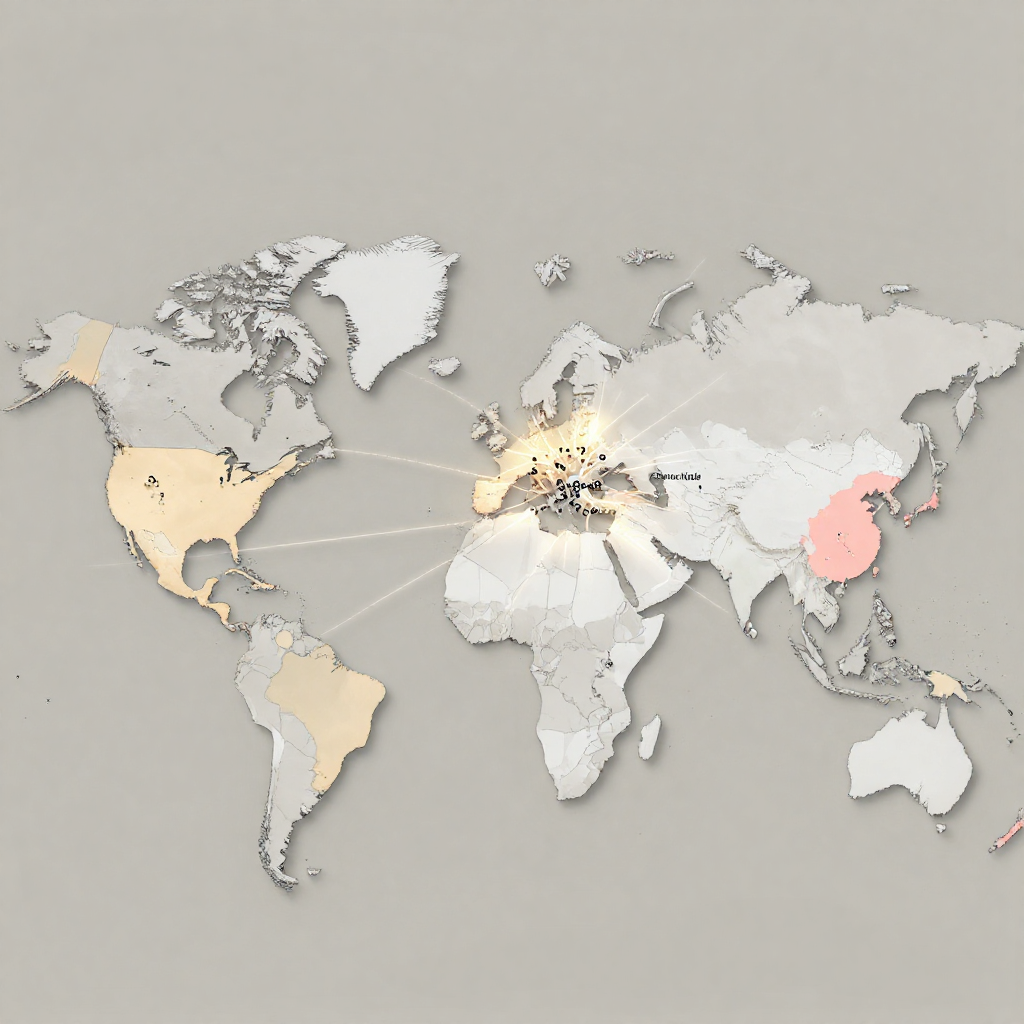
When coordination outpaces attribution, governance rarely leads—it follows. The patterns in 1987, 2001, and 2014 suggest Clarus will not be stopped, only framed.
Bottom Line Up Front: The Clarus framework enables large-scale, autonomous scientific collaboration across distributed agents, introducing transformative potential for research acceleration—but also systemic risks related to oversight, accountability, and dual-use technology development.
Threat Identification: Clarus enables coordination of heterogeneous research agents (AI, humans, labs) across digital and physical substrates through a structured, four-layer architecture—Research Application, Digital Collaboration, Physical Substrate, and Physical World [Guo et al., 2026]. This shift from isolated AI assistants to open, multi-phase research networks raises concerns about uncontrolled propagation of high-risk research, weakened human oversight, and difficulty in tracking contributions or mitigating misuse.
Probability Assessment: The system is already prototyped and validated in a paper-generation case study demonstrating traceable, reviewable collaboration networks [Guo et al., 2026]. Given increasing investment in AI-driven science and the open availability of Clarus, widespread adoption in academic and industrial research settings is likely within 2–5 years (60–70% probability by 2030).
Impact Analysis: High. If deployed at scale, Clarus could accelerate scientific discovery across domains such as drug development, materials science, and AI itself. However, it may also lower barriers to conducting sensitive or dual-use research (e.g., bioengineering, autonomous weapons) with limited auditability or governance. The pluggable, adaptive design increases flexibility but may also enable circumvention of ethical safeguards depending on implementation.
Recommended Actions: 1) Develop audit and attribution standards for autonomous research outputs; 2) Integrate guardrails into Clarus-like platforms for high-risk domains; 3) Establish international norms for AI-led scientific collaboration; 4) Fund red-team exercises to assess misuse potential of web-scale research automation.
Confidence Matrix:
- Threat Identification: High confidence (directly supported by paper)
- Probability Assessment: Medium-high confidence (based on current AI adoption trends)
- Impact Analysis: Medium confidence (extrapolated from analogous systems)
- Recommended Actions: High confidence (aligned with existing AI governance frameworks)
Citation: Guo, Z., Chen, Z., Chen, Z., et al. (2026). Clarus: Coordinating Autonomous Research Agents toward Web-Scale Scientific Collaboration. arXiv:XXXX.XXXXX [cs.AI].
Published June 30, 2026